
ARLEN
ELEGANCE IS RESISTANCE
The Art of Composure
Arlen Manifesto No. 4
In an age of speed, elegance slows down.
In an age of noise, composure speaks softer.
Refinement is no longer a matter of taste — it’s survival.
Elegance is resistance.
— Editor, Arlen Magazine
EDITOR’S NOTE
The Discipline of Silence
He doesn’t talk about control.
He practices it.
Elegance is not wealth.
It’s rhythm — a way of existing within limits.
It’s knowing when to stop, when to listen, when to breathe.
The world is trembling with speed.We move slower.In restraint, we find rebellion.
— Editor, Arlen Magazine
ACT I — The Code of Composure
4 — The Discipline of Silence
6 — Composure as Power
8 — Elegance Under Pressure
ACT II — The Body as Architecture
11 — The Still Body
14 — Poem: He Ties His Laces like Sharpening a Blade
16 — Ritual & Control
18 — Sculpted Restraint
ACT III — Intellect & Intuition
21 — Refinement as Rebellion
24 — Candlelight Studies
26 — Quiet Obsession
28 — Smoke & Precision
ACT IV — Decay & Defense
31 — Elegance in Ruin
34 — The Burden of Restraint
36 — Deconstructed Composure
38 — Tension Studies
ACT V — Rebirth of Stillness
41 — Return to Form
44 — The Discipline of Serenity
46 — Modern Monks
48 — Final Notes
ACT I
—
THE CODE OF COMPOSURE


Power doesn’t rush. It waits.
COMPOSURE AS POWER
The modern world celebrates speed.
Fast opinions, fast fashion, fast success. Every platform rewards reaction, not reflection. Yet amid that frenzy, a quiet archetype is re-emerging — one that doesn’t perform calmness but embodies it.
Composure has become a form of control. It’s not the posture of indifference but the discipline of intent. The ability to remain steady under pressure has replaced the loud performance of confidence. It’s the silent refinement that outlasts chaos.
In creative circles, business, or sport, the most compelling figures are those who resist the urge to rush. They think slower, dress with precision, and move like each gesture has weight. Their power isn’t expressed — it’s implied.
Elegance, in this context, is less about aesthetics and more about engineering. The way a man structures his day, his space, or his suit becomes a reflection of self-command. His restraint signals strength — not submission.
When everything around us accelerates, composure becomes countercultural.
It’s not a lack of emotion; it’s the management of it.
A signal of internal architecture — deliberate, unshaken, timeless.
“The new masculinity isn’t loud.
It’s measured, stoic, and surgical.”

YSL Men’s Winter 25 by Anthony Vaccarello
Elegance Under Pressure
True elegance is tested, not performed.
It isn’t revealed in comfort but in resistance — the ability to remain exact when everything around you distorts. The man who endures pressure without losing proportion has already won.
Clothing, then, is not decoration — it’s reinforcement. The collar that holds, the stitch that doesn’t break, the silhouette that stays sharp. Each piece mirrors the psyche: firm, deliberate, alive.
Elegance, under pressure, becomes something elemental — not about softness or spectacle, but structure. The refinement that survives friction is the only kind that matters.
“Grace is not the absence of struggle — it’s precision in motion.”

ACT II
—
THE BODY AS ARCHITECTURE
"Strength is only beautiful when it’s controlled."


The Still Body
A disciplined body is an architectural statement — not built for applause, but for alignment. Every muscle holds a decision. Every pause conceals endurance.
Stillness, contrary to passivity, is the moment between chaos and command. The athlete, the craftsman, the soldier — they all understand the geometry of restraint.
To remain still when every instinct says move — that’s elegance under its truest pressure.
“Stillness is not the absence of motion — it’s mastery over it.”
Preparation is the first act of power.

He Ties His Laces Like Sharpening a Blade
He ties his laces like sharpening a blade.
Not to impress — to prepare.
His rituals are geometry —repetition until rhythm becomes instinct.
He doesn’t rush to win;he trains to remain.
Poise is his weapon.Control, his uniform.
And silence — his war cry.

Ritual & Control
He wakes before light touches the city. There’s no audience, no noise — just motion, precise and deliberate. The repetition doesn’t bore him; it steadies him. Every rep, every lace, every controlled breath is a quiet defiance of disorder.
He isn’t an athlete or a monk or a craftsman — he’s all of them, depending on the hour. His life is built on rhythm, not reward. There’s elegance in that — in knowing that control isn’t something you show. It’s something you maintain.
He doesn’t chase perfection. He engineers it through patience.
To him, grace is not a performance. It’s a daily construction — a line held straight, a tempo never broken.
“Control is the new luxury. And ritual — the way to earn it.”

Sculpted Restraint
The body is the first suit. Tailoring only amplifies its geometry.
What we wear is not armor from the world, but a mirror of what we’ve built within.
Restraint has a physical language — shoulders squared, spine straight, eyes fixed.The garment doesn’t control the man; the man controls the garment. That’s where style begins — in proportion, not excess.
Every crease, every seam, every measured breath says the same thing:I am composed.
“True strength leaves no trace — only structure.”
“Discipline evolves into desire.Precision becomes seduction.”
ACT III
—
Intellect & Intuition

In a culture obsessed with excess, the truest form of defiance is restraint.
Refinement as Rebellion
Refinement isn’t decoration — it’s control.
It’s the art of knowing when to stop, what to conceal, and what to reveal. In a world that rewards noise, refinement whispers. It doesn’t demand attention; it earns it.
To be refined today is to resist immediacy — to choose time over trend, silence over spectacle. The man who irons his shirt at dawn, who polishes his boots not for display but for discipline, practices rebellion in its purest form. His elegance isn’t performance — it’s philosophy.
True refinement requires sacrifice. You learn to say no — to distraction, to indulgence, to anything that dulls precision. It’s not about living perfectly; it’s about living deliberately. Every gesture, every texture, every object in his orbit becomes an extension of intent.
Refinement, then, is not softness. It’s steel beneath silk. The ability to hold your ground without raising your voice. The calm of a storm contained.
And in that composure — in that refusal to be careless — lies the most radical statement of all.


The Rituals of Refinement
There’s a discipline in elegance that few acknowledge.
Every morning ritual — the shave, the press, the choice of fragrance — isn’t vanity.
It’s preparation.
An alignment of mind and material before the world intrudes.
The refined man doesn’t rush.
He values rhythm: the hum of the kettle, the scent of cedar, the feel of fabric between his fingers.
Each motion is deliberate, a quiet performance of control.
In a culture addicted to spontaneity, restraint becomes radical.
Elegance, then, is a private rebellion — a refusal to be undone by the chaos outside.
It’s a ritual of self-respect disguised as aesthetic order.
“Every action is a reflection of discipline — or its absence.”
Smoke & Precision
He sits alone, the room dim, air thick with the scent of tobacco and oak.
No music — just the rhythm of his breath and the pulse of a quiet mind.
In this hour, refinement isn’t about appearance.
It’s about endurance — the ability to remain composed when no one sees you.
The smoke curls like thought.
Precise. Controlled. Impermanent.
Every drag is a meditation in balance — indulgence held within boundaries.
To live elegantly is not to deny the dark, but to shape it.
To turn chaos into ritual, solitude into serenity.
Precision becomes pleasure — not in excess, but in exactness.
The glass half-filled, the cigarette half-burnt — the poetry of control.

“Refinement begins where impulse ends.”
Composure Is the Last Luxury Left
When everything is urgent, calm becomes the mark of power.
Act IV
—
Decay & Defense
Elegance in Ruin
The world eventually erodes everything — buildings, bodies, ideals.
But true refinement isn’t about preservation.
It’s about endurance — the ability to remain deliberate amid decay.
Elegance, stripped of perfection, becomes something raw and human.
A man in ruin, still standing straight, carries more grace than one in gold.
Because dignity is not about the setting — it’s about the spine.


"Even collapse can be composed."
The Burden of Restraint
Every virtue, when stretched too far, becomes a prison.
Restraint — once noble — turns suffocating.
The man who never falters, never raises his voice, never bends, eventually forgets the shape of ease. His control becomes costume; his silence becomes cage.
Perfection demands constant tension.
It’s not the calm that exhausts — it’s the suppression beneath it.
He holds his jaw tight, his back straight, his words measured — because he fears that chaos might reveal the truth he’s spent years concealing: that beneath elegance lies ache.
The world applauds composure.
But grace, when forced, loses its beauty.
True poise is not the denial of emotion — it’s its mastery.
To remain elegant, one must sometimes unclench.
"Even strength needs release."
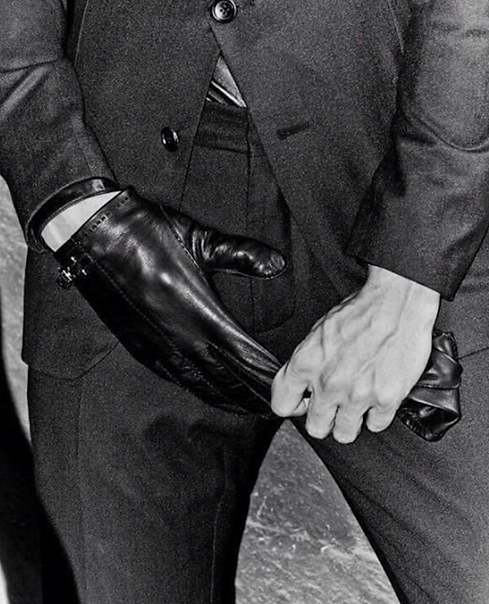

Sculpted Disarray
Every crease tells a story.
The undone button, the scuffed shoe, the untied lace — each an act of quiet rebellion against rigidity.
Disarray, when intentional, becomes art. It exposes the humanity beneath the polish.
The new refinement doesn’t fear imperfection; it curates it.
The collar is not careless — it’s free.
The undone coat is not neglected — it’s alive.Style is no longer about armor — it’s about honesty.
True elegance exists between control and collapse —where the man allows himself to breathe.
“Elegance doesn’t disappear in disorder — it adapts.”
Tension Studies
Every surface under pressure reveals its truth.
Glass hums before it cracks.
Fabric strains before it tears.
And the body — jaw, wrist, breath — carries the same architecture of resistance.
Elegance isn’t the absence of strain.
It’s the ability to hold it beautifully.
To let the world push — and not shatter, only vibrate.
“Even collapse can be composed.”

"The Body Learns What the Mind Forgets."
Act V
—
Rebirth of Stillness

I had to stop to see again
Return to Form
In a world obsessed with constant motion — repost, reload, react — stillness becomes rebellion.
We forget that creation begins in silence. That the body, like the earth, regenerates when left undisturbed.
“Return to Form” is not about nostalgia; it’s about rhythm — a new discipline of restraint. The artist no longer performs for the algorithm. The athlete no longer trains for validation.
The form becomes honest again. A reflection of what was always there beneath the noise.
“Composure survives the fall.”

“Perfection is not motion. It’s the space between movements.”
Arlen
Final Form
Every era believes it’s the first to rediscover grace.But elegance — true elegance — isn’t invention. It’s memory.
A whisper passed through generations: the way a jacket falls on a shoulder, the stillness in a boxer’s stance, the refusal to shout in a world that only hears noise.
This issue began with rebellion, moved through ruin, and arrives here — in stillness.A return not to luxury, but to clarity.
“Elegance survives pressure. Always.”

On Silence and Steel
Arlen was built on the belief that taste is resistance.
This issue was written for those who refuse the chaos — who find beauty in order, power in calm, and rebellion in restraint.
May this silence echo.
Arlen Editorial Team
Issue 4: Elegance Is Resistance — The Rebirth of Stillness.
WE WANT YOUR VISION.
Submit Your Work
Arlen is more than a magazine. It’s a living archive of now.We want to see the world through your eyes — photography, writing, fashion, sound, or art.If it belongs to the culture, it belongs here.
- Send your work (5–10 images or 1–2 written pieces).
- Short description of your project (max 200 words).
- Include your name, IG handle.
- Email: arlenmagazine@gmail.com